
Draining a hot tub means emptying the old water, cleaning the shell and components, then refilling and rebalancing chemicals so the water is safe and clear.
A useful rule of thumb for most residential tubs is to drain and replace the water every three to four months, which keeps total dissolved solids (TDS), organics, and biofilm from undermining your sanitizer and stressing equipment.
Today, this guide walks you through how often to drain, what changes that schedule, the clear warning signs that you need to drain now, and safe step-by-step draining and rebalancing procedures.
You’ll also learn how regular drains prevent scale, reduce pump strain, and eliminate bad odors, plus when a San Diego–area professional inspection makes sense.
How Often Should You Drain Your Hot Tub? What “Draining Frequency” Means
“Draining frequency” is the schedule you use to keep sanitizer working by lowering TDS and removing the organics that cause cloudiness or foam. For most homes, a practical baseline is every three to four months, a balance between water quality and the effort of refilling and rebalancing chemicals.
Local conditions like water hardness, how often people use the spa, and which sanitizer you use can make that interval shorter or longer, so it’s smarter to watch the water than to follow a strict calendar.
If you want a San Diego–specific plan, Action Spa Repair can evaluate your water and equipment and fine-tune the 3–4-month guideline to your local water and system.

This table gives starting recommendations by usage level so you can set a schedule and then adjust based on test results.
| Usage Level | Typical Frequency | Months |
|---|---|---|
| Light use (1–2 people, occasional) | Baseline drain-and-refill schedule | 4–6 |
| Moderate use (family, regular evenings) | Standard residential schedule | 3–4 |
| Heavy use (frequent guests, parties) | Shortened interval due to TDS rise | 1–3 |
Factors That Affect How Often You Drain Your Hot Tub
Several factors change how quickly water quality degrades: bather load, sanitizer chemistry, and the minerals in your source water. More bathers add oils, lotions, and organics that raise TDS faster.
Different sanitizers (bromine vs. chlorine) react differently with those organics and require different upkeep. Hard or mineral-rich fill water accelerates scale and can force earlier draining. Knowing these factors helps you decide whether to stick with a calendar-based routine or switch to condition-based monitoring with regular tests.
Recommended Hot Tub Water Change Schedule
A short, practical schedule helps you plan maintenance while responding to actual water tests and visible cues. The standard recommendation is every three to four months for typical household use. Move to monthly or every 1–3 months for heavy bather loads or if TDS climbs quickly.
Extend to four to six months only with very light use and excellent filtration. Treat this as a guideline and let tests for TDS, pH, and sanitizer residual dictate your actions; test-driven triggers should override calendar timing when water quality falls off. Adjusting the schedule this way prevents premature wear and keeps sanitizer performance reliable.
What Are the Clear Signs That Your Hot Tub Needs Draining Now?
There are visible signs and chemical red flags that tell you a drain is overdue. Cloudy water, persistent foam, sharp chloramine or musty odors, and chronically unstable sanitizer or pH readings all point to accumulated organics or high TDS.
Some problems are fixable, cleaning the filter or shocking the spa, but when those quick fixes don’t hold, a drain-and-refill is a reliable corrective step. The following subsection explains how cloudiness and foam signal deeper issues and how to choose between DIY fixes and calling a pro.
This table lists common signs, quick diagnostic tips, and recommended actions so you can triage problems quickly.
| Sign | Diagnostic Tip | Action |
|---|---|---|
| Cloudy water | Test the sanitizer and clean the filter; if cloudiness persists after shock | Drain and refill |
| Persistent foam | Check for detergents and high organics; if filter cleaning is ineffective | Drain and clean the shell and filters |
| Strong chemical odor | Low free sanitizer with high combined chlorine (chloramines) | Shock and test; drain if the balance won’t stabilize |
Cloudy or Foamy Water as a Sign to Drain
Cloudiness usually means suspended organics, tiny particles, or filter inefficiency that reduce clarity and consume sanitizer faster than it can work. Foam tends to come from detergents, emulsified body oils, or decayed organic matter that skimmers and filters can’t fully remove.
Short-term fixes include shocking the spa, cleaning or replacing filters, and using a defoamer, but if clarity or foam returns quickly, the root cause is likely high TDS or biofilm, problems best solved by a full drain and deep clean. If regular cleaning and shock treatments don’t stop the issue, plan a complete drain-and-clean.
Unpleasant Odors and Chemical Imbalances in Hot Tub Water
Sharp “chlorine” smells (chloramines) or musty odors mean your sanitizer is tied up reacting with organics and not leaving enough free residual to protect the water. If pH, alkalinity, or sanitizer readings swing wildly despite corrections, elevated TDS or decaying organics are often buffering the chemistry and stopping it from stabilizing.
Start with testing and rebalancing pH/alkalinity, perform a non-chlorine or chlorine shock, and inspect filters; if you can’t hold parameters within safe ranges after those steps, it’s time to drain. Draining removes the organics and lets your sanitizer and chemical adjustments work predictably again.
Why Is Draining Your Hot Tub Important? Benefits of Regular Hot Tub Water Changes
Regular drains reduce total dissolved solids and organics that blunt sanitizer performance and encourage biofilm, improving safety and the bather experience.
Fresh water helps prevent scale on heaters and jets by lowering mineral concentration, lets filters work more efficiently, and reduces pump and heater strain so components last longer.
Beyond equipment protection, new water restores clarity, removes odors, and lowers the risk of bacteria‑related problems. The next sections connect draining to protecting hardware and to measurable improvements in water quality.
Draining to Prevent Damage to Hot Tub Components
Mineral scale on heaters and plumbing restricts flow and reduces heat transfer, forcing pumps and heaters to run harder and fail sooner. Biofilm and trapped debris clog filters and jets, causing uneven circulation and hotspots that damage seals and motors.
A scheduled drain-and-clean removes deposits and gives you a chance to inspect components so small issues don’t become costly repairs. Regular draining and inspection are simple preventive steps that protect your pumps, heaters, and circulation system.
Draining to Improve Water Quality and Sanitation
Draining lowers TDS and organics that consume sanitizer and form combined chlorine, so your sanitizer can actually kill microbes again. Removing biofilm and replacing old water reduces microbial reservoirs and lets pH and alkalinity corrections take hold predictably after a refill.
Testing after refilling, checking pH, alkalinity, and sanitizer residual, confirms improved chemistry and supports a safe reopening of the spa. Regular water changes make ongoing maintenance straightforward and keep sanitation reliable.
How Can You Safely Drain and Maintain Your Hot Tub? Best Practices for Draining Your Hot Tub
Safe draining starts with cutting power and planning how you’ll protect equipment and the surrounding area while you empty and clean the shell. Use the tub’s drain valve for a gravity drain or a submersible pump to remove water faster, then clean the shell, jets, and filter housing before refilling to remove biofilm and scale.
Refill slowly with fresh water and rebalance alkalinity, pH, and sanitizer to the manufacturer’s recommended ranges before use. The sections below give compact step-by-step draining instructions and post-drain cleaning and rebalance tips.
Step-by-Step Instructions for Draining Your Hot Tub
Start by switching off the power at the breaker and removing the cover so the shell can ventilate, and you have full access for cleaning. Choose a draining method: open the drain stub and attach a hose for a slow gravity drain, or place a submersible pump in the shell and route the discharge away from structures for a quicker removal.
While it’s empty, inspect and clean or replace the filter, wipe down the shell with a nonabrasive cleaner, and use a line‑flushing circulation cleaner if needed to clear biofilm. After cleaning, refill and follow the rebalancing steps to get your chemistry back to safe levels.
- Turn off the power and remove the cover.
- Drain via the valve or a submersible pump to a safe discharge point.
- Clean the shell, jets, and filters while the tub is empty.
- Refill and rebalance chemicals before using the spa.
Following these steps reduces risk to your equipment and gives you a clean baseline for each refill.
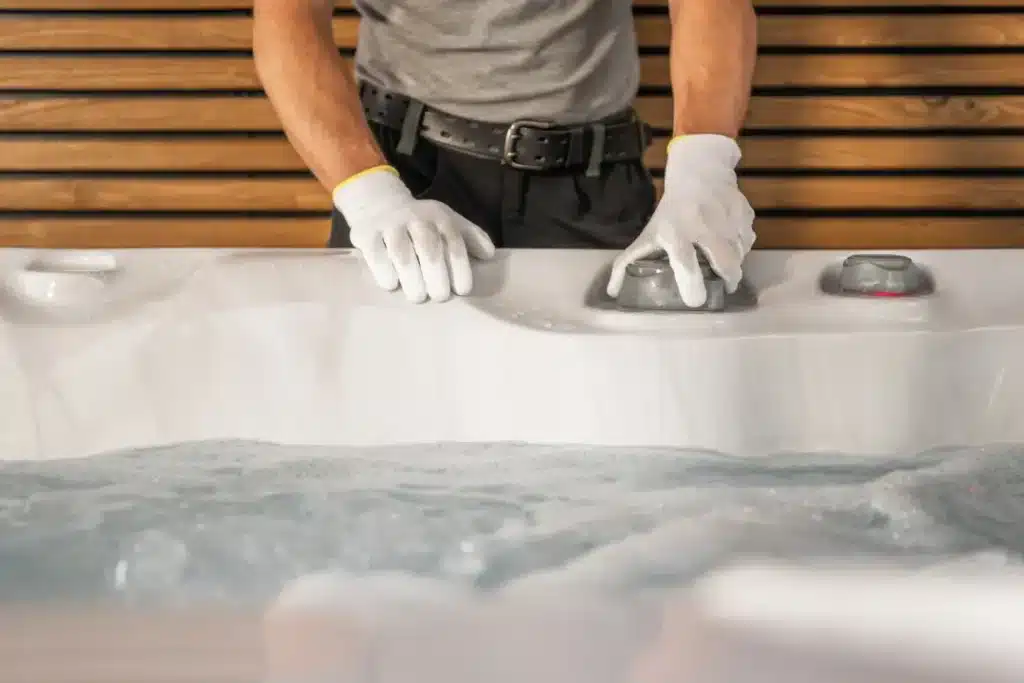
Cleaning and Rebalancing Water After Draining
With the shell cleaned and filters inspected or replaced, refill slowly to avoid airlocks and ensure proper circulation through the filter housing. Start by adjusting total alkalinity, then bring pH into the 7.2–7.8 range, and finally build sanitizer residual in small steps, allowing circulation time between additions and tests.
Wait for the recommended circulation time before using the spa so chemicals fully mix, and you can confirm safe sanitizer levels with test strips or a kit. If a parameter won’t stabilize, call a professional for a diagnosis.
If you’d rather not DIY, a local drain‑and‑clean service gets the job done quickly and minimizes downtime.
- Action Spa Repair offers warranty-backed service, keeps parts on hand for faster repairs, and provides remote support for our technicians.
- Choose pro service for expert diagnosis, thorough line flushing, and less risk of accidental damage compared with DIY.
- Call when you have recurring chemistry issues, visible scale inside plumbing, or complex system layouts.
Choosing a pro service keeps your hot tub safe and reduces the chance of missed issues that later turn into repair calls.
Frequently Asked Questions
What Are the Risks of Not Draining My Hot Tub Regularly?
Skipping regular drains lets total dissolved solids (TDS) and organic matter build up, which undermines sanitizer effectiveness. That can cause cloudy water, bad odors, and an increased risk of bacteria or biofilm. Over time, scale can form on heaters and plumbing, increasing wear on components and raising the chance of costly repairs.
Can I Use My Hot Tub While Waiting to Drain It?
You can continue using the tub if water tests and visible checks look normal, but stop using it if you see cloudiness, strong odors, or unstable chemical readings. Regular testing and maintenance help, but if the water shows clear signs of degradation, prioritize draining and cleaning to protect health and equipment.
How Can I Tell If My Hot Tub Water Is Safe to Use?
Test water regularly for pH, alkalinity, and sanitizer levels. Aim for a pH between 7.2 and 7.8 and alkalinity between 80 and 120 ppm. Make sure your sanitizer (chlorine or bromine) is within the recommended range. If any parameter is outside those bands, correct it before using the spa.
What Should I Do If My Hot Tub Water Is Still Cloudy After Draining?
If cloudiness persists after a drain and refill, check filtration and look for high TDS or persistent biofilm. Confirm filters are clean and functioning. A shock treatment (non‑chlorine or chlorine) may help; if cloudiness remains, consult a professional for a deeper inspection and cleaning to find the root cause.