
Losing a few inches of water from your hot tub each week could mean a hidden leak, a cracked pipe, or just normal evaporation and splash-out.
In this guide, we’ll show you why your hot tub might be losing water, how to find those leaks, simple DIY fixes, and when to call Action Spa Repair for expert leak detection. We’ll cover:
- Common reasons for water loss in a hot tub
- Easy ways to find leaks
- How to fix pumps, pipes, jets, and shell issues yourself or with professional help.
- Managing water levels in San Diego’s climate, even without obvious leaks
- Tips for regular maintenance to keep your spa in top shape
- The best local services for leak repair and how to book.
By the end, you’ll be ready to stop that water loss and get your spa back to being a source of comfort and relaxation.
Key Takeaways
- Water loss doesn’t always indicate a leak. In San Diego’s warm, dry climate, evaporation and splash-out can reduce water levels by up to an inch per day.
- True leaks usually come from worn seals, cracked PVC pipes, or loose jets that let water escape behind the shell or into the equipment bay.
- Simple at-home tests, like the bucket test or dye test, can confirm if your spa is leaking or if the evaporation is just natural.
- DIY fixes, such as replacing O-rings, tightening fittings, or swapping out small PVC sections, can stop minor leaks before they become major.
- More complicated leaks near electrical components or under the shell should always be handled by professionals to avoid damage or safety risks.
- Action Spa Repair offers professional leak detection, same-day repairs, and lasting solutions, helping San Diego homeowners protect their spas and prevent water loss.
What’s Causing Your Hot Tub to Lose Water?
Hot tub water loss happens when seals, pipes, or the shell itself spring a leak, or when factors other than leaks cause the water level to drop. Knowing the cause helps you fix it right and avoid more problems.
Worn-Out Pump and Shaft Seals
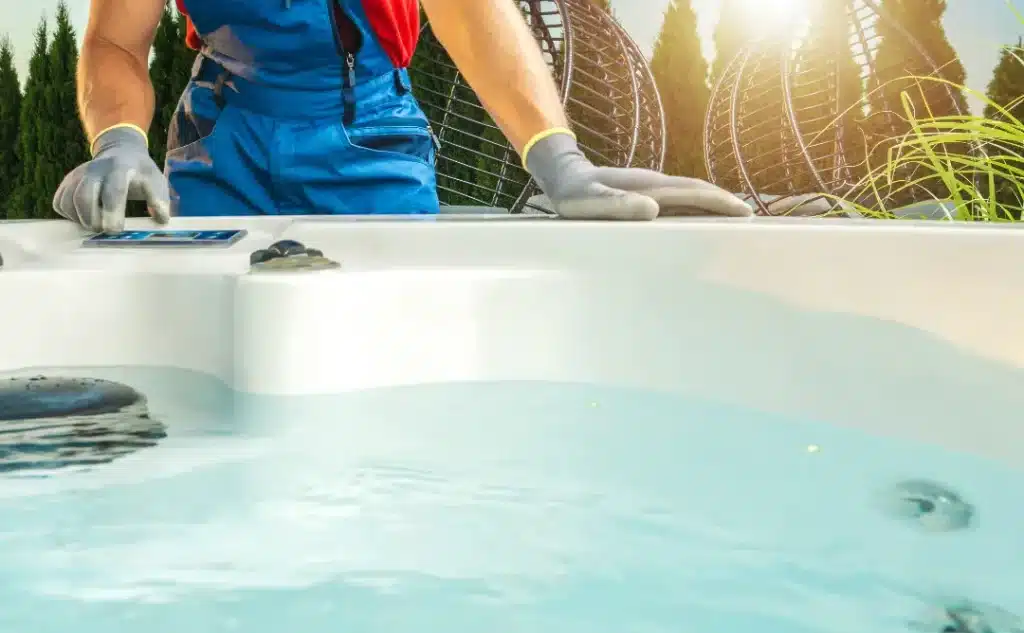
Your hot tub pump and shaft seals are important barriers that keep water where it belongs, in the plumbing and not in your motor. When these seals fail or the housing bolts loosen, water can leak around the pump and pool beneath the equipment area.
Age, debris, or unbalanced water chemistry often wear down the rubber O-rings, allowing leaks to occur. Replacing a worn seal is a quick and affordable fix that stops the leak, protects your motor, and restores smooth and efficient water flow.
Cracked Plumbing and PVC Pipes: Hidden Leaks That Drain Fast
Even a small crack in your spa’s plumbing can result in significant water loss overnight. Freezing temperatures, soil movement, or poor installation can weaken and split PVC pipes or joints. Over time, chemical imbalances and pressure changes can worsen the damage.
Fixing it means identifying the faulty section, cutting it out, and replacing it with a new PVC coupling or fitting; this seals the circulation system tightly.
Loose Jets and Worn Gaskets: Leaks Lurking Behind the Shell
Jets, diverter valves, and manifold gaskets direct water flow throughout your spa. However, when a jet housing loosens or a gasket cracks, water can escape behind the shell without your knowledge.
Leaky valves or fittings may only appear when the tub is drained. Checking each jet for tightness, replacing old gaskets, and ensuring the valves are properly seated can eliminate these hidden leaks and keep your system watertight.
Cracked Hot Tub Shell: Surface Damage That Spreads
Cracks in your hot tub shell, whether visible or hairline, can cause slow and continuous water seepage. These often happen due to uneven ground support, freeze damage, or impact stress.
You can seal surface cracks using marine-grade epoxy or fiberglass repair kits, but deeper damage may need sanding, resin application, and a protective finish to fully restore strength and prevent further damage.
Evaporation or Splash-Out: When Water Loss Isn’t a Leak
In sunny San Diego County, it’s common for your spa water level to drop by about half an inch per day due to evaporation.
If you add heavy use, strong jets, or leave the cover off, splash-out can make it appear as if there’s a leak. However, if your water level drops more than an inch overnight, it’s time to look into it.
Keeping your cover on when not in use and maintaining balanced water chemistry can significantly reduce both evaporation and foaming, which are two major causes of unnecessary water loss.
How to Find Hot Tub Leaks Effectively
Finding a leak involves a careful inspection, ranging from simple visual checks to the use of specialized tools. Combining these methods gives you the best chance of success.
What Is the Step-by-Step Process for Performing a Hot Tub Dye Test?
- Lower the water level so it’s below the skimmer and jets.
- Turn off all pumps.
- Add 2–3 drops of spa dye near seams, fittings, and jets.
- Watch to see if the water flow pulls the dye toward a specific spot; this indicates a leak.
- Mark the area where you found the leak so you can repair it.
This precise method helps you pinpoint leaks that might be hidden behind panels or in the plumbing.
How to Use Visual Inspection and Water Level Monitoring to Find Leaks?
Start by walking around your hot tub, looking for wet spots under the equipment, damp insulation, or water stains on the cabinet. Record exactly how much the water level drops over 24 hours with the cover on to see if it’s more than normal evaporation.
Check pump seals, pipe connections, the heater housing, and the filter area for any drips. Tracking the water level against expected evaporation rates quickly shows if and where water is escaping.
When Should You Use the Bucket Test to Confirm Water Loss?
- Place a bucket filled with water on a hot tub step. Ensure the water level inside the bucket matches the water level in the tub.
- Mark the water level on both the inside and outside of the bucket.
- After 24 hours with the cover on, compare the water level drop in the tub versus the bucket.
If the tub’s water level dropped more than the bucket’s, you likely have a leak. This simple test helps you avoid unnecessary repairs if evaporation is the main issue.
How Can Technicians Use Remote Support and Specialized Tools for Leak Detection?
Professional technicians use advanced tools like thermal imaging cameras, electronic listening devices, and hydrostatic pressure tests to find hidden leaks. Remote support allows them to access equipment manuals and diagnostic guides instantly, saving time.
Using specialized leak detection methods and professional sensors, technicians can find leaks inside walls or under the shell without major disassembly.
How to Fix a Leaking Hot Tub: DIY Repairs and Professional Solutions
When your spa is leaking, you can often fix it yourself for minor issues, but more complex problems are best left to the pros to ensure a lasting repair.

What Are the Steps to Replace Hot Tub Pump Seals and O-Rings?
- Turn off the power and drain the water below the pump level.
- Unscrew the union nuts and carefully remove the pump from the plumbing.
- Separate the wet end of the pump from the motor housing.
- Remove the old shaft seal and O-rings, and clean the surfaces where they sit.
- Install the new shaft seal and lubricated O-rings, making sure they are correctly positioned.
- Reassemble the pump, tighten the unions to the manufacturer’s specifications, refill the tub, and check for leaks.
This process will restore the pump’s seal and prevent water from reaching the motor.
How to Repair or Replace Cracked PVC Pipes and Plumbing Fittings
- Drain the water from the pipes above the cracked area.
- Use a PVC saw to cut out the damaged section of pipe.
- Clean and smooth the pipe ends, then apply PVC primer and solvent cement.
- Insert a new coupling or fitting, twisting it slightly to ensure even glue distribution.
- Let the glue fully cure, then refill the spa and test for leaks under pressure.
Using the correct solvent-cement technique will create a strong, leak-proof repair.
How to Fix Loose or Cracked Hot Tub Jets and Gaskets
- Turn off the circulation and lower the water level below the jets.
- Remove the decorative trim and the jet housing.
- Inspect the gasket and replace it if it’s brittle or flattened.
- Clean the jet housing area and apply silicone lubricant to the new gasket.
- Reinstall the jet housing, tighten the retaining ring evenly, refill the tub, and test each jet to ensure a watertight seal.
Regularly checking and replacing gaskets prevents leaks from forming behind the shell.
How to Repair Hot Tub Shell Cracks Using Epoxy and Fiberglass Kits
- Drain the water below the crack and sand the exposed shell surface.
- Mix a marine-grade epoxy resin with its hardener according to the product instructions.
- Apply the resin over the crack, embed a fiberglass patch, and smooth the surface.
- Once cured, sand the repaired area until it’s smooth, then polish and buff it to match the surrounding shell.
- Refill the tub and check carefully for any signs of leaking.
This method restores both the look and the structural integrity of your hot tub shell.
When Is It Necessary to Call a Professional Hot Tub Leak Repair Service?
You should call a professional if leaks involve electrical parts, plumbing hidden within walls, internal heater issues, or if your DIY attempts haven’t fixed the problem. Complex leaks can cause more damage, create safety risks, or void warranties.
Professional hot tub repairs, such as leak detection services from Action Spa Repair, ensure leaks are found accurately, repaired safely, and fixed for good.
Why Is My Hot Tub Losing Water but No Visible Leak?
Sometimes, hot tubs lose water without any obvious drips or puddles, which can be confusing. Understanding these hidden causes can solve the mystery of disappearing water.
San Diego Evaporation Rate
San Diego’s dry, coastal climate accelerates evaporation, especially when the tub is exposed to direct sunlight or wind. An uncovered hot tub can lose 0.5 to 1 inch of water daily.
Using a good thermal cover and maintaining a balanced water chemistry helps reduce evaporation by minimizing surface movement and foam.
Splash-Out or Overflow
Strong jets hitting the sides of the tub, people getting in and out vigorously, or excessive foam can cause water to splash out. If the water level becomes too high due to a malfunctioning filter, it may overflow without your notice.
Adjusting jet intensity, using a non-foaming sanitizer, and ensuring the tub isn’t overfilled can reduce losses from splashing and overflow.
Hidden Leak Sources
Check valves and diverter valves in the circulation system can develop internal leaks as their seals wear out. This can send water into hidden spaces instead of back into the jets.
These leaks are hard to spot from the outside but cause unexplained water loss. Testing individual lines by isolating valves can help identify these hidden issues.
How to Track Down and Fix Hidden Water Loss, Even Without Visible Leaks
Sometimes, your hot tub’s water level keeps dropping, but there’s no clear leak in sight. In these situations, a little detective work can help. Start with the bucket test to rule out normal evaporation.
Next, use dye tests around fittings and jets to find small leaks. Keep a log of your water refills; a steady drop can reveal patterns that indicate a hidden issue.
After that, check the equipment compartment for damp spots or corrosion. For hard-to-find leaks, thermal imaging can help spot changes in temperature inside the cabinet, revealing where water might be escaping.
Once you find the source, repairing or resealing the affected valve or pipe joint will create a watertight system and stop that slow, frustrating loss for good.
Regular Maintenance Tips to Prevent Hot Tub Water Loss and Leaks
Consistent upkeep helps maintain the condition of seals, plumbing, and the shell, preventing unexpected leaks.
Maintain Proper Water Chemistry
Keeping your water balanced with the right levels of sanitizer, pH (7.2–7.8), alkalinity (80–120 ppm), and calcium hardness (150–250 ppm) protects seals and plumbing from corrosion.
Testing your water weekly with reliable strips and shocking it monthly helps prevent chemical imbalances that can damage O-rings and PVC fittings.
Do Routine Inspection of Seals, Gaskets, and Plumbing Help
Checking pump seals, pipe connections, jet housings, and heater connections monthly can reveal early signs of wear, like brittle O-rings or small drips, before they become major leaks.
Tightening loose connections and replacing old gaskets during regular service helps keep the circulation system watertight.
Effective Winterization to Avoid Freeze Damage
Even in milder climates, freezing temperatures can crack plumbing and fittings. Draining the circulation lines, using a shop vacuum to remove all water, and adding non-toxic antifreeze to external pipes prevents damage from ice expansion.
Insulating the cabinet and using a good cover offer extra protection during cold nights.
How Often Should Hot Tub Owners Schedule Professional Maintenance?
Having your hot tub professionally serviced twice a year, typically for spring startup and winterization, ensures seals stay flexible, plumbing connections are secure, and the heater works without leaks.
Regular professional maintenance can prevent costly emergency repairs and extend the life of your hot tub.
What Are the Best Hot Tub Leak Detection and Repair Services in Atlanta?
Choosing the right service provider means getting leaks fixed quickly and getting back to enjoying your backyard oasis.
Action Spa Repair has been fixing hot tub repairs in Atlanta and San Diego County since 1993. We have a large inventory of parts for all major spa brands and use remote support to help our technicians fix issues faster and with fewer return visits. Our local expertise ensures accurate leak detection and reliable repairs.
We also provide remote support to our field technicians for the best solutions for your hot tub. This efficient approach reduces diagnosis time, lowers service costs, and often enables same-day repairs if parts are available in our San Diego warehouse.
How to Book a Hot Tub Leak Repair Service with Action Spa Repair?
Booking a professional leak inspection and repair is easy. Just contact our Atlanta service team to schedule an on-site diagnostic. We’ll confirm the service details and ensure parts are available. With flexible appointment times, Action Spa Repair will get your spa leak-free and ready for you to enjoy.
Frequently Asked Questions
How can I tell if my hot tub is leaking or just evaporating?
Try the bucket test: place a water-filled bucket on a spa step and mark both levels. After 24 hours, if the spa’s water level drops more than the bucket’s, you likely have a leak. In San Diego’s climate, normal evaporation shouldn’t exceed about half an inch per day.
Where do most hot tub leaks occur?
Leaks typically happen at pump and shaft seals, cracked PVC pipes, jet gaskets, and valves. Even small cracks or worn rubber seals can cause continuous water loss that adds up quickly.
Can I fix a leaking hot tub myself?
Yes, you can manage minor leaks by tightening fittings, replacing worn O-rings, or sealing small shell cracks with marine epoxy. However, if the leak is hidden in plumbing lines or near electrical parts, it’s best to call a licensed spa technician.
What causes hot tub plumbing cracks?
Cracks usually occur from freezing, ground movement, or chemical corrosion. While San Diego’s winters rarely freeze, long-term chemical imbalances and pressure changes can still weaken PVC joints over time.
How can I prevent future hot tub leaks?
Regularly inspect gaskets, seals, and plumbing, maintain balanced water chemistry, and always keep your cover on to reduce evaporation. Scheduling biannual maintenance with Action Spa Repair helps ensure your system remains leak-free, efficient, and ready for year-round enjoyment.
Conclusion
Your hot tub is a place for relaxation, and preventing water loss is key to keeping it in great condition. Whether you’re dealing with evaporation or hidden pipe leaks, systematic checks and timely repairs will keep your hot tub full, warm, and inviting.
Trust the local experts at Action Spa Repair for professional leak detection, fast repairs, and maintenance that keeps your spa running smoothly for years to come.