
Cracks in a hot tub shell are breaks in the acrylic surface or fractures that reach the fiberglass backing. Left alone, they cause water loss, strain pumps and heaters, and can lead to serious structural damage.
In this guide, we explain how to recognise common crack types, what typically causes them, and which issues are safe to stabilise with careful DIY repair. It also shows when you should stop patching and call a professional to protect your spa.
San Diego County owners can turn to Action Spa Repair in El Cajon for diagnostic testing, stocked parts, and warranty-backed leak repairs and maintenance.
What Are the Common Types of Hot Tub Cracks, and How Do They Affect Your Spa?
Hot tub cracks typically fall into three groups: hairline, stress (or spider), and structural. Each type differs in depth, cause, and the risk it poses to the shell. Knowing which kind you’re dealing with helps you decide whether a simple patch will work or if you need reinforcement and professional lamination.
Catching problems early keeps a small surface flaw from turning into a costly structural repair that affects the shell and surrounding decking. Different crack types and what they mean for your spa:
- Hairline cracks, very thin surface splits that are often cosmetic but can allow slow leaks if they go through the sealant layer.
- Stress or spider cracks, lines radiating from one point that usually mean repeated flexing or an impact; they can widen over time.
- Structural cracks, deep breaks that pass through the shell and backing, risk rapid water loss and loss of support.
| Crack Type | Typical Visibility | Recommended Urgency |
|---|---|---|
| Hairline | Fine lines in the acrylic surface | Low–Medium |
| Stress / Spider | Radiating lines from an impact or weak spot | Medium |
| Structural | Gaps or separation through the shell and backing | High |
Use this classification to set inspection frequency and choose the right repair method, monitor hairlines, repair stress cracks promptly, and act quickly on structural breaches.
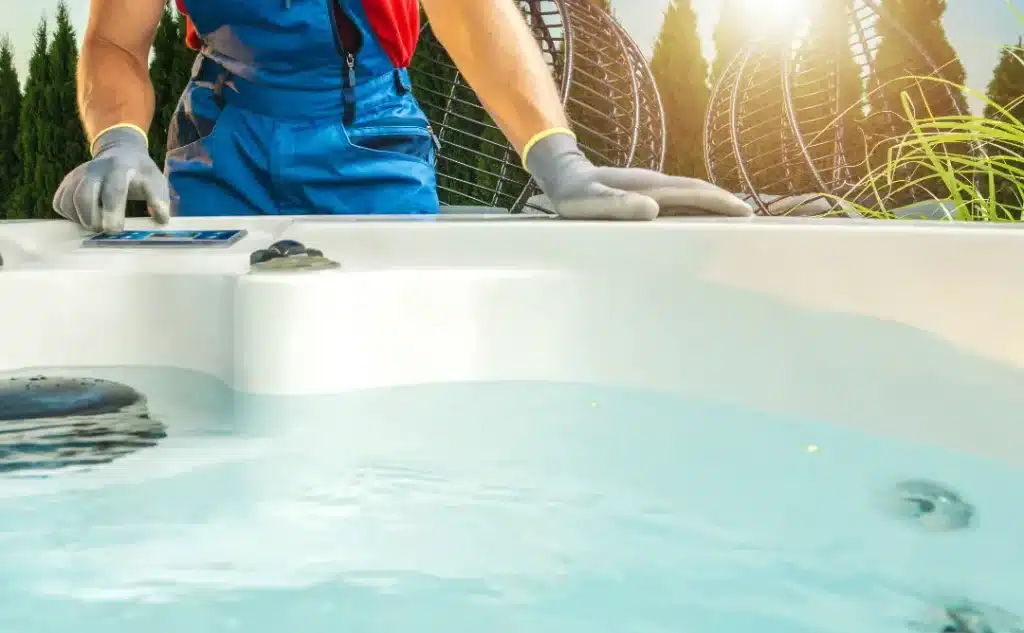
Hairline Crack vs. a Structural Crack in Hot Tubs
A hairline crack affects only the acrylic surface and may not reach the fiberglass backing. Structural cracks extend into or through the backing, weakening the shell’s load-bearing capacity. Hairlines are usually caused by UV exposure, minor impacts, or material fatigue; structural cracks are caused by foundation movement, heavier impacts, or manufacturing defects.
Hairline damage can often be monitored or repaired with an acrylic kit; structural issues typically need reinforcement, lamination, or professional restoration. A dye or pressure test can show depth and whether a DIY fix is only temporary.
Hot Tub Cracks: Leaks and Damage
When a crack lets water reach the fiberglass backing or the voids beneath the shell, it can break adhesive bonds and start delamination. Even small amounts of water can corrode fittings, soak insulation, and force pumps and heaters to work harder, raising repair costs.
In changing temperatures, trapped water can expand and worsen cracks. Regular checks for damp spots under the shell and sealing visible cracks promptly slow progression and reduce secondary damage.
What Causes Hot Tub Cracks and How Can You Prevent Them?
Cracks result from material limits, weather exposure, mechanical stress, and installation problems. Acrylic can craze or weaken from UV and chemicals, while the fiberglass backing can delaminate if moisture gets in or if the bonding was poor.
Preventive care focuses on a stable foundation, support, sun protection, and balanced water chemistry to reduce stress on shell materials. Simple, regular steps cut material fatigue and extend shell life.
Common causes with quick prevention tips:
- UV and sunlight exposure: Use a UV-rated cover and provide shade when possible to slow acrylic degradation.
- Poor foundation or uneven support: Set your spa on a level, continuous base to prevent flexing under weight.
- Impact or physical damage: Keep heavy objects off the shell and protect edges during moves and maintenance.
Maintenance checklist: Inspect the shell monthly, check water chemistry weekly, and check the cover quarterly.
| Material | Common Failure Mode | Prevention Priority |
|---|---|---|
| Acrylic surface | UV crazing and surface stress | High |
| Fiberglass backing | Delamination and bonding failure | High |
| Gelcoat/sealant | Wear and micro-cracks | Medium |
Routine inspections and timely fixes reduce the chance that small cosmetic issues turn into leaks or structural repairs.
Factors Leading to Acrylic and Fiberglass Hot Tub Shell Cracks
Acrylic often develops surface crazing and hairline cracks from long sun exposure, chemical imbalance, or repeated flexing when support is uneven. Fiberglass backing failures usually follow moisture intrusion, poor factory lamination, or impact that breaks layer bonds.
The acrylic layer is the waterproof barrier; the fiberglass backing provides the strength. When either fails, the load shifts and deterioration accelerates. That’s why matching the repair to the failed material, surface patching for acrylic, and lamination for fiberglass, is essential.
Maintenance Tips to Prevent Hot Tub Cracks in San Diego
San Diego’s strong sun and mild winters make UV protection and solid foundation support especially important. Keep water chemistry balanced to protect the finish, use a durable UV-rated cover, and make sure the spa sits on a continuous, level surface that supports its full weight.
Inspect the shell regularly and address small flaws quickly with the right repair kit or a professional assessment to avoid larger problems down the line.
How Can You Fix Cracked Hot Tubs: DIY vs. Professional Repair Options?
Repairs range from conservative DIY surface patches for hairline cracks to full structural lamination by professionals. Choosing the right path prevents wasted time and protects long-term shell strength.
DIY works for small, shallow acrylic cracks using the right epoxy or acrylic repair kit; professionals handle backing reinforcement, fiberglass lamination, and proper bonding. Rule of thumb: if a crack reaches the backing, affects support, or causes rapid leakage, call a pro. Below is a side-by-side comparison to help you decide.
| Approach | Tools / Materials | Cost / Time / Risk |
|---|---|---|
| DIY surface patch | Acrylic repair kit, sandpaper, solvent | Low cost, quick, low risk for true hairlines |
| DIY fiberglass patch | Fiberglass kit, resin, rotary tool | Moderate cost, longer time, medium risk if inexperienced |
| Professional structural repair | Diagnostic testing, lamination, in-warehouse parts | Higher cost, reliable turnaround, low long-term risk with warranty |
When to DIY and what you’ll need:
- DIY is appropriate when cracks are clean hairlines with no sign of backing failure or water beneath the shell.
- Materials needed: acrylic repair kit, 220–400 grit sandpaper, isopropyl cleaner, masking tape, and sufficient curing time.
- Clean and dry the area completely so the repair can bond properly.
- Sand and prepare the surface to give the compound a strong bond.
- Apply the repair compound following the kit instructions, and allow full cure before refinishing or refilling.
Follow the kit directions closely, test for leaks after curing, and keep an eye on the repair. If the crack returns or you find water under the shell, schedule a professional assessment.
Safe DIY Hot Tub Crack Repair and Required Materials
DIY is safest for shallow, non-structural cracks confined to the acrylic surface with no sign of water under the shell. Use a matched acrylic or fiberglass kit, the correct epoxy or polyester resin for your shell, sandpaper to feather edges, a solvent cleaner, and proper PPE.
Respect cure times and temperature requirements; partial cures lead to failed bonds and repeat leaks. If a dye or pressure test shows penetration into the backing, stop and call a professional.
Professional Hot Tub Crack Repair Services in San Diego
Professionals restore structural integrity using diagnostic testing, correct material selection, and reinforcement techniques that DIY kits can’t reproduce. Local San Diego technicians offer stocked parts for faster turnaround, warranty-backed workmanship, and experience spotting hidden delamination or base problems.
Hiring a trained technician can lower lifetime costs by avoiding repeat temporary fixes and helping make sure the shell is pressure-tested and leak-free before you use it again. The next section outlines the typical professional process you can expect.
If you have structural cracks, active leaks, or any doubt about backing integrity, schedule a professional repair to prevent further damage and get a durable fix.
What Is the Professional Hot Tub Crack Repair Process by San Diego Experts?
Professional repair follows a predictable sequence: diagnosis, preparation, repair, curing, and testing. That process restores watertightness and structural support while minimizing downtime.
Technicians start with a visual inspection plus dye or pressure testing to find leak paths, remove damaged material, match and apply the right repair system, then cure and pressure-test the repair under controlled conditions.
Warranty coverage and in-warehouse parts help shorten wait times and reduce the chance of repeat failures. Key professional steps typically include:
- Diagnosis and leak confirmation using dye, pressure, or electronic testing.
- Surface preparation, sanding, cleaning, and removing failed material.
- Structural repair, fiberglass lamination, epoxy infusion, or acrylic resurfacing as needed.
- Curing and finishing followed by pressure testing and system startup.
| Phase | Primary Task | Outcome / Follow-up |
|---|---|---|
| Diagnosis | Dye or pressure testing | Locate the leak and define the repair plan |
| Prep | Remove failed material and clean | Create a sound bonding surface |
| Repair | Laminate or apply epoxy | Restore structural strength |
| Test & Close | Cure and pressure test | Confirm watertightness and return to service |
This workflow helps make professional repairs more reliable, extend spa life, and usually includes documented warranty protection and post-repair testing.
Key Steps in Diagnosing and Repairing Hot Tub Shell Cracks
Diagnosis starts with a methodical inspection: document visible cracks, run a dye test to trace water paths, and do a pressure or fill test to measure leak rate. That sequence separates surface flaws from deep backing failures and avoids unnecessary invasive work.
Preparation removes loose material and feathers the edges to a clean, dry substrate. Repairs are matched to the material: epoxy fills for small structural voids, fiberglass lamination for backing reinforcement, and acrylic resurfacing for the finish, followed by controlled curing and final leak testing.
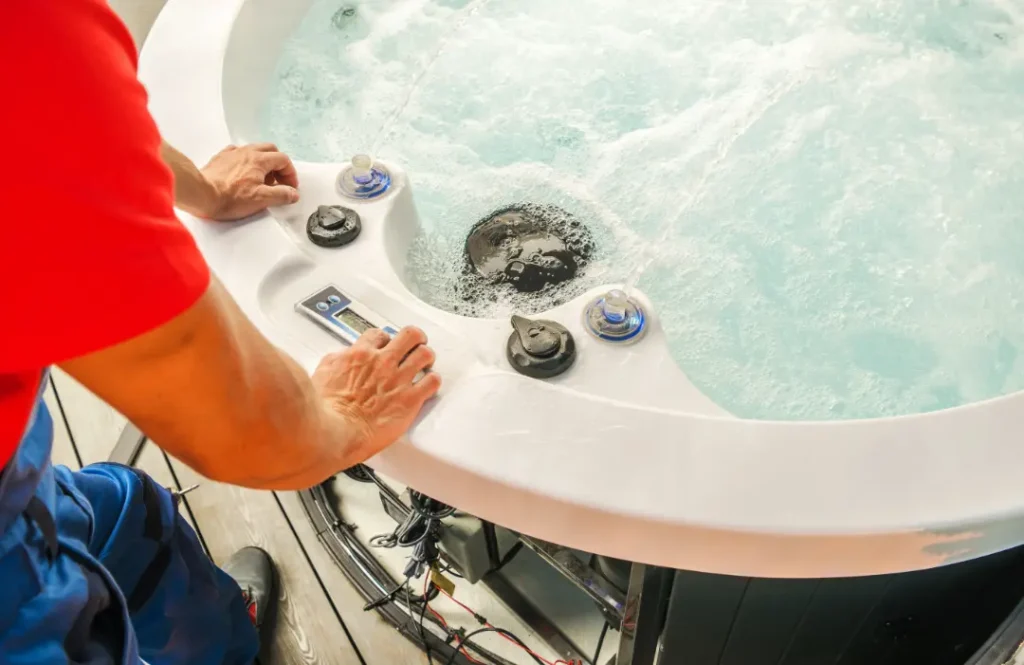
How Professional Repair Restores Structural Integrity and Prevents Leaks
Professionals rebuild the shell’s load-bearing layers using proper bonding techniques and reinforcement so the spa transfers loads evenly and resists water intrusion. The formula is straightforward: right materials plus thorough prep equals durable adhesion that prevents delamination and stops leaks.
Reinforcements like layered fiberglass and correct filleting at joints reestablish strength, while finishing restores the swim surface and seals leak paths. Post-repair pressure testing verifies success, and warranty coverage protects against early failures.
Action Spa Repair offers local San Diego County hot tub repairs and services. Owners in El Cajon and nearby communities can reach Action Spa Repair at 619-444-1720 to schedule an assessment or service appointment.
Frequently Asked Questions (FAQs)
1. How can I identify if my hot tub crack is serious?
Look at the crack’s depth and location. Hairline cracks are usually cosmetic; stress cracks suggest ongoing movement or impact; structural cracks penetrate the shell and need immediate attention. Use a dye test to see if water follows the crack and check for water under the shell or sudden drops in water level. When in doubt, have a professional inspect it.
2. What are the signs that my hot tub needs professional repair?
Call a pro if cracks go beyond the surface, leaks persist after patching, or you find water pooling under the spa. Also watch for changes in water chemistry that won’t stabilize, or extra strain on pumps and heaters; these can indicate hidden structural issues. Recurrent problems or worsening hairline cracks are good reasons to get an expert evaluation.
3. Can I prevent hot tub cracks with regular maintenance?
Yes. Monthly shell inspections, weekly water chemistry checks, and a UV-rated cover go a long way. Make sure the spa sits on a stable, level base to avoid flexing. Address small issues quickly and follow a maintenance checklist to extend the life of your tub and reduce the risk of cracks.
4. What materials are best for DIY hot tub crack repairs?
For surface cracks, use a quality acrylic repair kit matched to your shell. For more serious damage, a fiberglass —repair kit with resin and hardener is appropriate. You’ll also need sandpaper, a rotary tool for prep if required, and proper safety gear. Always follow the manufacturer’s curing and application instructions. If the backing is compromised, call a professional.